Saturday, April 26, 2014

Let's ALL Join the Librarian


Using Diigo in the Library and for Classroom Projects

"Gone are the days where you dial in your librarian" for getting links.  So an instructor said earlier this week, and as a school librarian who has spent hours building resource lists, it would be great if Diigo and sites like it would lead collaboratively to the strong, reliable resources in LESS TIME for the students.  (Experience says that if you want to convince a student to go beyond Google, you must prove the alternative to be both better and quicker.)  I agree that dialing in teachers, librarians, tech coordinators, and students can vastly expand the number of resources available.  I believe that people should think about at least two things as they embrace the great resource that Diigo can become:

1) Source evaluation.  Used well, Diigo offers the opportunity for in-depth and continued feedback for users.  Unfortunately, that's like saying that Google offers amazing resources.  Of course Google offers great resources, but if you always go to the links to Yahoo Answers and Wikipedia, or never go beyond the first page of responses (or don't know how to craft a solid search to make sure that there are great responses on the first page), then it becomes a problem.  A link might be posted without thought as to its veracity, and a dozen people might comment on the problem without a person paying attention to the comments.

2) Independent work - Diigo offers community feedback, taking advantage of the work of others to inspire and expand your own research.  Diigo can also be used by students who don't want to do the research themselves to take advantage of the provided links and highlighted text and go no further.

When working with younger students with less experience in source evaluation, the first point is important because one wants to make sure that there is good guidance towards high quality sources.  In working with older students with more experience, the second point is important because there is a goal to wean these students off over-dependence on others and help them learn to trust their skills and abilities.

So how can the librarian best take advantage of Diigo?  Consider using Diigo for a group of instructors to build the resource list and make this viewable by younger students, but not a collaborative project with the students.  Consider taking some of the time saved because students will be getting added feedback and support during the research process, and put that time towards additional work on source evaluation.  With older students, have the community build entirely through student input, with the instructors only adding comments, not original links.  Finally, with all students, remember that if the question can be answered simply through Google, Wikipedia, or the Diigo, then we probably aren't asking the right questions in the first place.  

As a modern school librarian, I come to the same conclusion I have come to many times over the past few years.  Namely, Great tools like Diigo keep my job constantly changing on the surface, but they do not replace me and my fellow educators.  

What do you think are some important things to keep in mind as we create lesson plans for using Diigo?

PS. I'm also psyched about using Diigo for my non class-specific projects, like National Novel Writing Month.  What a great tool for sharing resources!  And unlike twitter, it doesn't come and go like a flash in the pan!  (The tweet comes and goes, not Twitter the resource itself.)

Image Citation: 
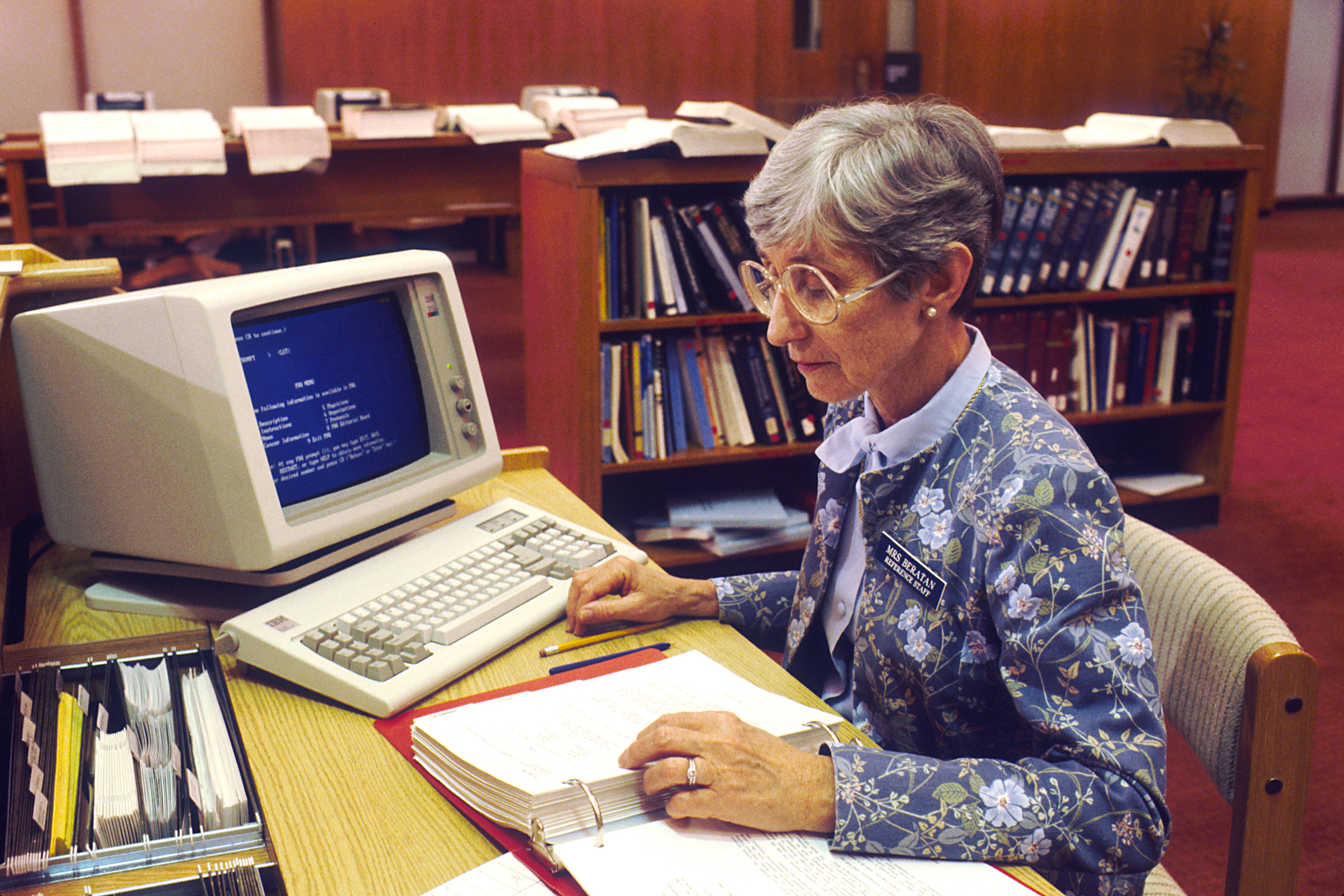
Branson, B. (1987). Librarian Accessing PDQ. National Cancer Institute. Retrieved May 15, 2014 from http://commons.wikimedia.org/wiki/File:Librarian_accessing_pdq.jpg.

Technology supporting learning

Nowadays, technology makes the world spin faster and every day there is something new coming up. In the past, I still remember when I had a school paper, I would research in the old encyclopedias we had, that once belonged to my mother. Finding information was not so easy, almost limited. Today, with internet and google, the world has changed and we have (fast, even instant) access to pretty much everything. Got a question? Ask Google.


People know a lot more today, as knowledge is available as long as you have internet connection. Therefore, teaching has also changed. Teachers have assumed a new role, less of retainers of information and more of facilitators, who will lead and guide students through the learning process.

"When students are using technology as a tool or a support for communicating with others, they are in an active role rather than the passive role of recipient of information transmitted by a teacher, textbook, or broadcast."(1)

That means keeping up - to - date is vital to survive in today`s world. The new generation of students were born with a smartphone on their hands. As educators, we need to be aware of that and accept how valuable technology is in a classroom.

"The myriad resources of the online world also provide each classroom with more interesting, diverse, and current learning materials. The Web connects students to experts in the real world and provides numerous opportunities for expressing understanding through images, sound, and text." (2)

Online books, encyclopedias, E-mails, social network websites, video - sharing websites, blogs, microblogs and so many many other resources available should be integrated with education.

This week I was introduced to a new tool - Diigo. I had never heard of it before but it called my attention because of how simple it is to use and the possibilities it offers in a classroom. I`ve reasearched some lesson plans using this tool and I was totally convinced that it is doable.

I was specially interested in the highlighting tool. Even though I believe techonolgy helps us a lot in learning and having access to information, I also believe that make people still copy and paste information without reading the whole thing. This could a be a task, invite students to share their websites on a specific topic (just like we did in the previous task) and ask them to highlight what called their attention the most.


Using sticky notes is another way to make sure students reflect on what they read (and that they actually read it).

I can imagine and even find online many uses for Diigo in the classroom, however I cannot really imagine 3 year - olds using this tool (yet). The world is changing fast, but with my students I don`t think it is possible to be integrated. We are already using technology in other ways, such as apps from our Ipads, smart board games, videos online, weebly for communicating with parents. We`re preparing students for tomorrow to get to the point to using tools such as Diigo effectively.


Citations from:

1. Change in student and teacher roles - http://www2.ed.gov/pubs/EdReformStudies/EdTech/effectsstudents.html
2. Why inegrate technology into the curriculum? - http://www.edutopia.org/technology-integration-introduction
Images from:
1.https://encrypted-tbn1.gstatic.com/images?q=tbn:ANd9GcRDMf4JA22Y3LwPTeoNEfKLyG4q6IFVIkv9wnVfsILzGLirxAFH
2.http://images.tvnz.co.nz/tvnz_images/technology_news/2012/08/child_baby_toddler_computer_laptop technology_generic_2_3_4_N2.jpg
3.http://edudemic.com/wp-content/uploads/2010/07/diigoLOGO_transparent.png
4. http://image.slidesharecdn.com/quotes-090601015546-phpapp02/95/slide-5-638.jpg?cb=1377529500

Living, learning and improving with Diigo!

Diigo in the classroom and in our lives!

Being a teacher means: research, study and learn more! I had never heard about Diigo until last week. This is a fantastic tool to use while research and study, since teachers and students can gather useful and relevant information in a wide variety of sources and media.
Why should I use Diigo in my classroom? As I read in the article “12 Reasons Teachers should use Diigo”, here are some of the main reasons:
·         Diigo provides a free, efficient, effective and reliable way to save and organise your favourite websites, online articles, blog posts, images and other media found online;
 
·         Diigo provides opportunities for students to apply higher level thinking skills while researching and gathering information;
·         Diigo provides a forum for teachers and students to discuss areas of share interest, or a particular online website or resource using the ‘topics’ function within groups;
·         Use Diigo’s advanced tools to link its power to blogs and RSS. Lists of similar websites that you have created can easily be posted onto a blog by using the ‘post to blog’ button;
·         Use Diigo tools to enhance professional reading and save time creating summaries of online posts.
At PAS teachers have many documents, folders, assessments, among others save in the computer and with this tool everybody will be able to organize themselves and all the material in a proper way. Everyone can organize all your stuff since we have lots of tools, like putting relevant information in different colors.
For me Diigo is a tool to be used more in the academic and professional field. As a professional it helps me to organize myself: sticky notes, highlight important information, save important texts/videos, share material with my students, give them tasks using Diigo; and academically I can find what I need without wasting time, I access this everywhere, people around the world use this and share all kind of material.
Yes! I have to implement this in my classroom wherever I work and in my live!

Source: http://resourcelinkbce.wordpress.com/2011/07/19/12-reasons-teachers-should-use-diigo/

Diigo - The Ultimate Organizational Tool

http://quest.eb.com/images/132_1305177
Diigo Use in the Classroom

Diigo is a great bookmarking tool which has made it possible to gather and collect information from a variety of sources that may be shared with students who are completing research on specific topics.  This cloud -based organizational instrument allows users to access information from a variety of mobile devices from anywhere.  

As teachers, it becomes increasingly more difficult and time consuming to develop a list of approved databases and internet sites that students may use when conducting research on a specific topic. When using school library databases, students on campus have access the school’s server in order to retrieve information. When off campus however, it becomes more difficult to access the same information as passwords are needed to open many of these sites. In this day and age of instant gratification, many students become frustrated with wait time or searching for a username and password for accessibility to specific data. Some students often give up and either develop excuses for not completing the work or “Google it” from an unapproved source where copyright may be infringed and proper citation or reference information cannot be formed. With Diigo, teachers can have have more control over the flow and accessibility of information by forming groups in order to share libraries of approved sites. And, better still, students can begin to research information from approved databases and share this information using Diigo bookmarks for everyone’s use. As the class continues with the process, research can become more specialized allowing students to create and use distinctive search terms in order to access specific topics in the bookmarked sites. Students can even highlight specific pieces of information that they find particularly useful or meaningful from the article that others may peruse and choose to use.

Organization of Research Information
http://quest.eb.com/images/132_1311668

In social studies, we have recently completed a project where students had to sell the Byzantine Empire as a major travel destination in 1000 C.E. to feudal Europeans. Even though the librarian, the technology coach, and myself researched and developed a list of approved resources for students to use, the above mentioned problems ensued because of lack of access to library databases from off campus. With Diigo, students can access all information in the group setting by selecting their topic or subtopics as it were from anywhere with internet access. In addition, as students bookmark sites, they can write a few sentences relaying what they found interesting or important from the site that they found and that may be useful to others who are completing the same task. Students sharing information with their peers can be a more effective way of hooking reluctant participants in individual and group activities! Here, the bank grows and students share information more readily developing their skills using Diigo to keep information organized for themselves and others.

Initially, the process of getting students familiar with this bookmarking tool may take some time, but the rewards of collecting and organizing information are worth the effort. Creating group bookmarks which can be edited and updated over time will also help to keep units of study current and cut down on extra preparation before the unit begins. I look forward to developing information banks with my students in our next unit on the European renaissance and hope to continue to develop and use this tool with future with my colleagues and students in the upcoming school year.


Reference Citation
Cooper, Alicia, Dr. "What Do Students Learn by Using Social Bookmarking Site Diigo." Web log post. Freshmancomp.com. N.p., 22 Jan. 2013. Web. 
http://freshmancomp.com/2013/01/22/what-do-students-learn-by-using-social-bookmarking-site-diigo/

Images Citations
Computer Artwork Of Internet Communication. Photography. Encyclopædia Britannica ImageQuest. Web. 26 Apr 2014. http://quest.eb.com/images/132_1305177

Man Using A Laptop Computer By A Campfire. Photography. Encyclopædia Britannica ImageQuest. Web. 26 Apr 2014. http://quest.eb.com/images/132_1311668


Friday, April 25, 2014

Diigo Will Change Your Life


What is Diigo?

Pronounced as Dee'go, it is an abbreviation for "Digest of Internet Information, Groups and Other stuff." You see, we especially like the "Other stuff" part, which gives us an open mandate to relentlessly innovate and provide better and better value to our users (Diigo, 2014, "About Diigo," para. 3).

Before Diigo 

How many times in your personal and professional life have you been required to research, annotate, archive, and organize information? As I learned how to research in my school days this daunting task included books, magazines, articles, copies, notes, folders, Sticky Notes, highlighters, and a lot of other things, including frustration! As time has progressed I, along with 87% of the US population, have used the internet to "get news, learn, take care of health issues, communicate with friends and family, perform at jobs" as well as complete many other tasks (PewResearch Internet Project, 2014, "Summary of Findings," para. 2).

Life with Diigo

With Diigo we can close that paper research chapter in our lives rest assured that all of our infomation will be organized and saved for years to come. 

Imagine creating personal and professional libraries with organized tags, lists, and folders of actual pages from websites.  Now, imagine all of these documents with your own personal highlighter markings (of various colors!) and sticky notes on each page.  Lastly, imagine never having to wonder where you put something because a simple search on Diigo, from any location, will retrieve your information.

Personal Next Steps with Diigo

As the Learning Specialist in my school, I plan to share this valuable resource with my department.  Currently we have many resources shared in various folders and on many Google Docs with various names. Although I have only been at PAS for just under two years, our department has been asked to create so many files and documents that we cannot keep them straight or find them, and much time is wasted looking.  Diigo seems like the perfect solution.  This will also be a valuable resource for organizing various topics of readings to share and collaborate with others regarding our students and their learning.

Most of my career I have been a classroom teacher, and once again I am finding that tools like these make me miss the classroom even more. I am so excited to see the classroom teachers in my building implement Diigo into their rooms.  This tool will allow for no lost papers or recopying of lost items, and lighter backpacks. It also allows for students to share their information as well as collaborate with others.  Watch this short video to learn more about teachers using Diigo, and figure out how Diigo can change your life.

www.freetech4teachers.com/...diigo-teacher-accounts.html

What are you waiting for? Let Diigo change your life!